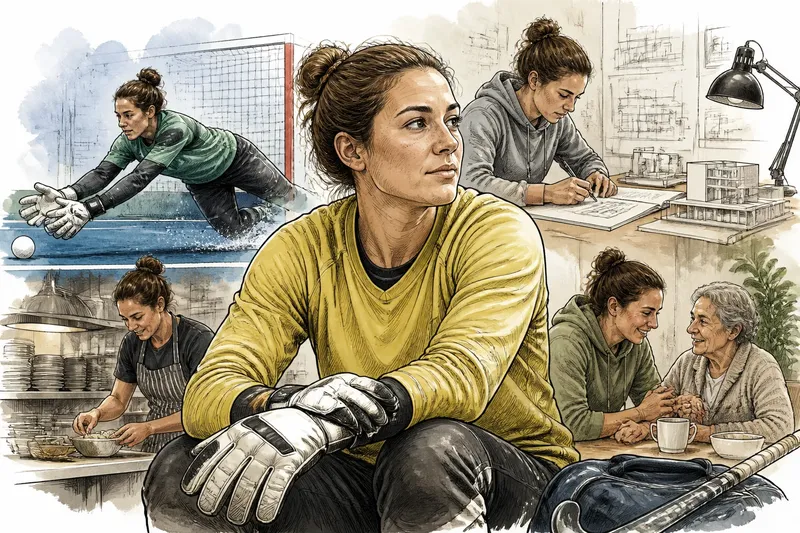
The Teammate Role That Continues After the Final Whistle
The teammate role after the final whistle can remain meaningful through modest, reliable gestures—without making you responsible for another person’s wellbeing.

What does the teammate role after the final whistle look like when there is no fixture to prepare for and nobody has asked you to give a speech? Often, it is a message that remembers what someone said last week, an invitation that leaves room for a no, or the good sense not to treat every silence as a problem to solve.
Competition gives teammates a shared task and a ready-made reason to see one another. Outside it, connection has to work without the team sheet. That does not mean preserving every old habit or becoming an unpaid counsellor. It means deciding which small acts of attention still feel mutual, and where your responsibility ends.
What remains of the role?
The role can remain as a relationship, even when the sporting job has ended or changed. You may no longer train together, travel to fixtures or share the same daily pressures. You can still know how a former teammate likes to be included, what they are juggling, and which conversation they would rather not have in front of a group.
That knowledge is useful because it is particular. “How are you?” is a decent opening, but “How did the move go?” shows you retained a detail the person chose to share. The point is not to keep a ledger of disclosures. It is to let ordinary attention say, without fanfare, that someone mattered outside their usefulness to the squad.
For some pairs, the connection will become occasional. Others will meet for coffee, watch a match or continue a friendship in a different setting. Neither pattern is a better measure of loyalty. A sporting relationship need not retain its old frequency to remain real.
How can you stay in touch?
Use a form of contact that suits the relationship you actually have now. A short message, a walk, a shared lunch or a group chat can all work. Choose the channel the other person uses willingly, rather than treating constant availability as evidence of closeness.
Specific invitations are easier to answer than vague promises. “I’m going to the café near the station on Saturday; would you like to join?” gives the other person a clear picture and a straightforward way to decline. “We should catch up soon” is friendly, but it can sit in the chat indefinitely, gathering the digital equivalent of dust.
It also helps to make invitations without assuming that a former teammate wants to revisit sport. Ask about their current interests, work, family or plans, and accept the subject they choose. They may enjoy discussing the old team; they may prefer to talk about anything else. The history is shared, not compulsory.
Say you and a former teammate used to travel to training together, but now live in different parts of town. You could send a message recalling that they mentioned starting a new job, then suggest a call when convenient. The expected observable result is simple: they can answer, decline or propose another time without being asked to account for their whole life. If the exchange does not continue, that is information about present availability, not a verdict on the friendship.
What counts as reliability?
Reliability is keeping small commitments and being clear when you cannot. If you say you will call after work, make the call or send a note to rearrange it. If a former teammate asks you to pass on a practical message, do so rather than relying on a hazy memory and good intentions.
Reliability also means leaving room for the relationship to change. A regular training partner may now have a different schedule, priorities or appetite for contact. You do not need to turn every missed plan into a conversation about where the friendship stands. But if cancellations become the pattern, ask once, plainly, whether they would still like to arrange something. Then take the answer seriously.
Do not mistake speed for care. A person can reply slowly and still be dependable; another can send lively messages while repeatedly failing to show up. Look at whether you can make plans and communicate honestly, not whether each message arrives with the urgency of a team announcement.
How much support is yours?
Your responsibility is to offer the support you can genuinely give, not to manage another person’s feelings or outcomes. You can listen, ask what would help, share information they have requested and encourage them to contact people equipped to assist. You cannot promise to fix what is happening, keep someone safe by yourself or be available at any hour.
Ask before moving into problem-solving. “Would you like me to listen, help think through options, or leave it there for now?” gives your teammate a choice and keeps you from delivering an unsolicited locker-room plan to a situation that calls for something else.
Be specific about your limits. “I can talk this evening, but I may not be the right person to help with the whole situation” is kinder than agreeing to more than you can sustain and quietly resenting it later. If a concern involves health or immediate safety, encourage help from a qualified professional or appropriate local service. Supporting someone does not require presenting yourself as one.
When should you step back?
Step back when contact is unwanted, persistently one-sided or beginning to cost you more than you can reasonably give. A warm history does not remove the need for present consent. If someone asks for space, respect the request; do not use a shared sporting past as a pass to keep checking in.
For a less explicit change, reduce the pressure. Send one clear invitation, avoid stacking follow-up messages, and let the other person choose whether to respond. If they do not, you can leave the door open without standing in it. That is not punishment. It is recognition that a relationship needs two participants.
Notice your own motives, too. If every conversation leaves you anxious that you have failed to rescue someone, or if you feel obliged to maintain contact because the old team depended on you, pause. A teammate can be important without being permanently on call. If the boundary feels difficult to hold, talk it over with someone you trust or a qualified professional.
What questions come up?
Do former teammates have to stay close?
No. Shared competition can create a lasting bond, but it does not create an obligation to preserve the same level of contact. A respectful, occasional exchange can be enough if both people are comfortable with it.
What if they never reply?
Send one considerate message or invitation, then allow silence to stand unless there is a clear reason to think it was missed. Repeated messages can turn an offer of friendship into a demand for reassurance.
Is it all right to talk about sport?
Yes, if the other person welcomes it. Ask whether they want to revisit a shared memory or would rather discuss what is happening now; not every former teammate wants the old role brought into every meeting.
What if I am struggling too?
Say what you can offer and what you need, rather than pretending to be unaffected. Mutual support can include taking turns to listen, while still making room for help from friends, family or a qualified professional.
What is not worth effort?
There is little value in performing closeness for the group, keeping score of who initiated last, or sending a message whose real purpose is to test whether the other person still cares. Those habits produce plenty of activity and little clarity.
Try one sincere, low-pressure invitation. Remember a detail when it matters. Keep the commitments you make, and say plainly when you cannot. The teammate role after the final whistle is meaningful when it becomes a freely chosen way of treating someone with care—not a post-match duty that follows either of you home.