The One-Label Trap in Talking About an Athlete
The one-label trap in talking about an athlete turns a complex life into a sporting shorthand. Describe their role precisely without making it their whole identity.
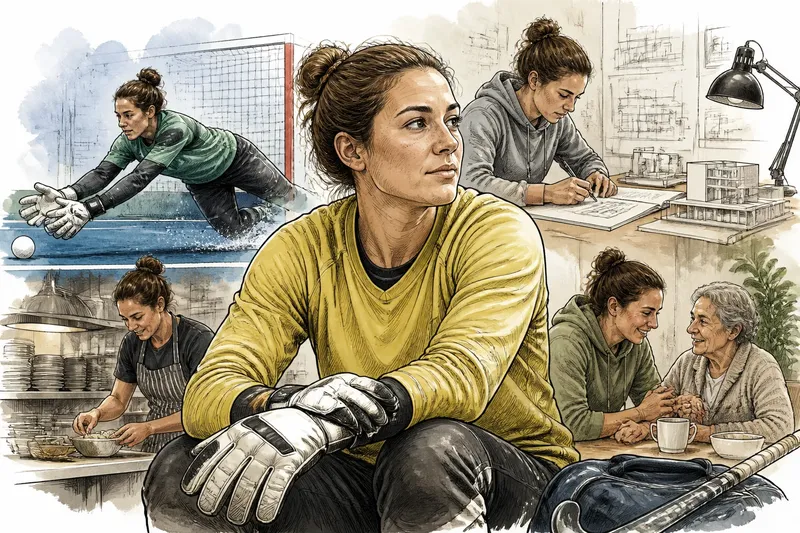
What do you call someone whose sporting role matters deeply but does not explain the rest of their day? The one-label trap in talking about an athlete is the habit of treating a job, team or result as a complete description of a person. A more careful account can name the sport clearly while leaving room for the work, relationships, interests and ordinary obligations that sit beside it.
1. Name the actual role
Start with what the person does, rather than what you assume the sport means about them. “A distance runner who trains with a local club” gives a reader more useful information than “a born competitor”. The first phrase describes an activity and context. The second turns a sporting role into a personality claim.
Sporting labels can be accurate and still too broad. “Footballer” might describe a professional, an amateur, a coach, or someone who plays informally with friends. If the distinction matters to the story, state it. If it does not, use the narrower detail that helps the reader understand the scene.
This is not a plea to avoid labels altogether. A label can orient a reader quickly, especially when the sport itself is relevant. The trouble starts when it carries more meaning than the writer has established. “Captain” describes a role in a team; it does not, by itself, tell us how the person leads, speaks at home or handles a difficult conversation.
2. Separate role from person
A role is something a person occupies in a particular setting. Identity includes the meanings they attach to that role, as well as other parts of life that may matter more in a different setting. The terms overlap, but they are not interchangeable.
Consider a sprinter introduced as “a champion”. The word may refer to a title, but used alone it can make achievement sound like the person’s defining quality. Naming the event or the context keeps the claim attached to what happened: “She won the regional final” describes an outcome. “She is a champion” may be an apt shorthand later, but it should not quietly replace the rest of her description.
Pay attention to grammar, too. “He is a boxer” can sound like a complete definition when it is the only sentence offered. “He boxes for a community club and works in a kitchen” places sport alongside another part of life without ranking either. The added detail need not be intimate. A person’s privacy is not a gap for a writer to fill.
3. Let context set emphasis
No description can include everything about a person. Selection is unavoidable; the editorial question is whether the chosen detail belongs to the purpose of the piece. A match report may reasonably foreground a player’s contribution. A profile about how an athlete spends an ordinary week needs a wider frame.
Ask what the reader needs to know at this point. If an athlete is speaking about coaching, their playing background may explain their perspective. If they are discussing family arrangements, a list of sporting honours may be irrelevant. Context makes a detail useful; repetition does not make it more revealing.
Imagine a reporter preparing a short profile of a hockey goalkeeper who also studies architecture and helps care for a relative. If the piece is about a match, the reporter might describe the goalkeeper’s position and the decisive moment, then leave the other details out. If the piece is about how the person balances a week, the reporter could mention training, coursework and care responsibilities, with the person’s permission. Neither version needs to claim that one role reveals the “real” person.
4. Use evidence for traits
Words such as “disciplined”, “selfless” and “fearless” often smuggle personality into a sporting account. They may be fair descriptions, but they need support beyond the fact that someone competes. A demanding training schedule does not automatically prove discipline in every part of life. A player who shares equipment may be generous in that moment; the act does not authorise a sweeping character portrait.
Describe the behaviour that supports the point. “She stayed after practice to help a new goalkeeper understand the drills” is more concrete than “she is naturally supportive”. The reader can see the action and judge its significance. If the athlete has explained what the action meant to them, include that perspective accurately rather than supplying a motive on their behalf.
Adjectives can still earn their place. The useful test is whether the sentence shows why they apply and limits the claim to what is known. “He was calm during the final minutes” is narrower than “he is unflappable”, which implies a stable quality across situations the writer may never have seen.
5. Keep achievement in proportion
Results are important when they are relevant. They can mark years of effort, shape a career and affect how others treat an athlete. But an achievement is an event or outcome, not a complete biography. A record, medal or selection may explain why a person is in the story; it does not explain every choice they make outside competition.
Proportion also means resisting the habit of making every other role serve the sporting plot. A job is not automatically a “backup plan”, and an interest is not necessarily a way to improve performance. A friendship does not need to be described as a source of motivation. These details can matter on their own terms, without being turned into equipment for the central narrative.
It is not worth the effort to add a catalogue of unrelated facts merely to prove that an athlete has a life beyond sport. That can feel like another form of reduction, only with more nouns. Choose details that clarify the person’s circumstances or answer the reader’s actual question.
6. Treat self-description carefully
An athlete may describe themself as a runner, a parent, a student, a coach, or several of these at once. Their own wording is valuable, particularly when they explain what a role means to them. It is not a licence to flatten them into the first label they use. People speak differently in different settings, and a brief interview answer may reflect the question they were asked rather than a permanent ranking of their identities.
When a self-description is central, give it its proper scope. “She calls herself a runner, and says coaching has become part of how she understands the sport” is more careful than presenting one phrase as a final account. If there is uncertainty about a title or preferred description, ask plainly and use the answer in context.
Respect also means not treating a person’s private life as public material simply because their sporting work is visible. A writer can acknowledge that other roles exist without naming relatives, workplaces or personal circumstances that the athlete has not chosen to share. A broader description is not the same thing as an unrestricted one.
7. Check what the sentence implies
Before publishing, read the description without its surrounding article. Does it make a narrow claim sound like a whole identity? Does it imply that a result proves a trait, or that non-sporting roles matter only because they support performance? If so, revise the sentence, add the relevant context or remove the claim.
Useful questions include:
- Does this label identify a specific role, or pretend to explain a personality?
- Is the sporting detail relevant to the subject of this passage?
- Have I supported any claim about character with observable behaviour or the person’s own account?
- Am I treating work, care, friendship or an interest as meaningful in its own right?
- Have I included only personal details the person has chosen to share?
- Would a more precise noun or verb make the sentence clearer?
Say you are editing a club profile that calls a goalkeeper “a natural leader” because she gives instructions during matches. You might change it to “She organises the defence during matches and helps new players learn the club’s calls.” The revised sentence names the behaviour and its setting. A reader can understand what the label was trying to say without being asked to accept a broader judgement.
What does a careful label do?
Is “athlete” too broad?
Not if the person’s athletic role is the relevant fact. It becomes limiting when used as the only description across a piece that asks about work, relationships or daily life.
Should a profile mention every role?
No. Include roles that help explain the subject, and leave out details that do not serve the piece or that the person has kept private.
Can an achievement define someone?
A person may regard an achievement as central to their identity, and a writer can report that view. The writer should distinguish the person’s own meaning from a conclusion inferred from the result.
What if the person uses one label?
Use their language accurately, then preserve its context. A chosen label deserves respect, but it need not stand in for every other part of the person’s life.
Describe without reducing
The one-label trap in talking about an athlete is avoidable without making every sentence cumbersome. Name the sporting role when it matters, describe actions rather than inventing character, and let other roles appear when they help answer the question at hand. Precision does not make an athlete less recognisable. It makes clear what the label can say—and where it should stop.