An Off-Season Afternoon for an Interest with No Score
An off-season afternoon interest with no score gives athletes room to follow curiosity without turning leisure into another performance target or project.
What could you do this afternoon that would still feel worthwhile if nobody could see the result? An off-season afternoon interest with no score can make room for curiosity without adding another performance target to the week. The useful choice depends less on finding a hidden talent than on what kind of attention you want to give yourself.
Some athletes want their hands busy; others want company, quiet, or permission to stop before anything becomes a project. Pick the afternoon that suits the day you actually have, not the more impressive one you might describe afterwards.
Start with the day
Before choosing an activity, notice what the afternoon can reasonably hold. Consider your energy, whether you want to be alone, how much preparation sounds tolerable, and whether you need to stay near home. This is not a self-assessment with a hidden score. It is a way to avoid selecting pottery in another town when what you want is a chair and a cup of tea.
Set aside a modest block of time, with room to arrive and leave without rushing. You do not need to finish a piece, learn a skill, or explain the choice to anyone. If training, recovery, work or family commitments already occupy the day, let them set the boundaries. An interest should fit the afternoon; the afternoon need not be rebuilt around it.
Choose by mood
If you want tactile focus, choose something that gives your hands a simple task and does not demand a polished result. A small sketchbook, a packet of watercolours, a loaf to knead, or a few stems to arrange can be enough. Pick materials you can use without buying a full set of specialised equipment. The aim is contact with the activity, not a convincing origin story for a new hobby.
If you want gentle company, choose an interest with a shared setting but no requirement to perform socially. You might visit a public garden with a friend, browse a bookshop, or sit together drawing at a café. Agree on an easy endpoint beforehand, such as leaving when either person has had enough. That keeps a companion from becoming an audience and the outing from turning into another appointment.
If you want quiet, take a book to a library or read at home with your phone out of reach. Choose by subject or by the first page’s appeal, not by whether the book appears useful. A walk with a field guide, noticing birds or street trees, can also give attention somewhere to rest. There is no need to log what you saw. The notebook can remain empty without the afternoon being wasted.
If you feel restless but do not want a workout in disguise, make something small in a place that permits stopping: try a few lines of a language, cook a new soup, or mend a garment while listening to music. Keep the task light enough that it does not become a test of discipline. If an activity starts to feel like training, productivity or a public demonstration, change it or leave it.
Keep the stakes low
Curiosity often survives better when the activity has no audience and no follow-up plan. You can tell a friend what you chose, but you do not owe anyone photographs, a finished object, or a decision about taking classes. Avoid buying equipment in anticipation of a more committed future self. Borrow a library book, use the pencils already in a drawer, or try an introductory session before investing in more.
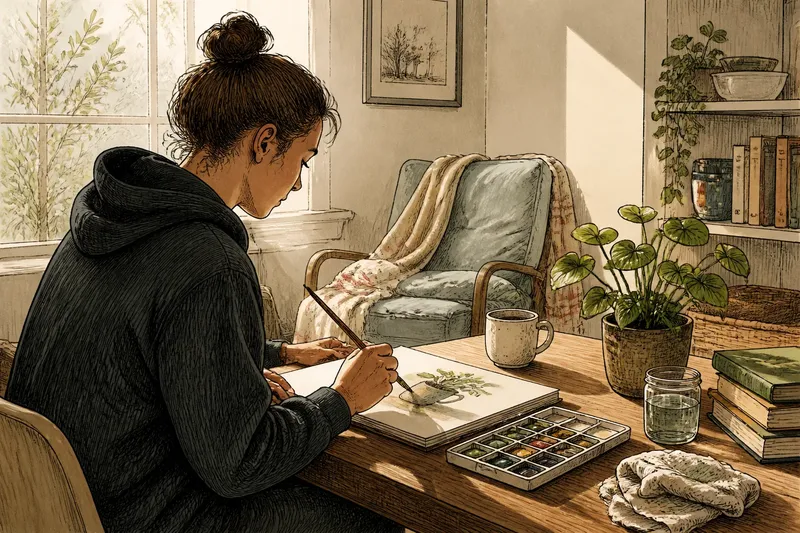
Say you have a free afternoon, feel socially tired, and own a half-used watercolour set. You could clear one corner of the table, paint a mug or a plant for as long as it holds your attention, then put the paper aside whether or not it looks finished. The observable result is simple: you have spent some time looking closely and making marks. No verdict on artistic ability is required.
Not every interest needs to become a restorative practice, a personal brand, or a useful skill. Those are quite capable of finding you on their own. It is not worth the effort to choose something mainly because it sounds unusual, impressive or easy to post about; that introduces an audience before you have decided whether you enjoy the activity.
Choosing by situation
What if I feel too tired to start?
Choose an activity with almost no setup, such as reading one chapter, listening to an album, or walking to a nearby park and sitting down. Give yourself permission to stop early; starting need not commit you to finishing.
Should I invite someone along?
Invite a person if company itself sounds appealing, and choose something where conversation can come and go. If you want to be unobserved, go alone or meet afterwards instead.
What if I want to improve at it?
Improvement is welcome if it grows from repeated enjoyment, but it need not be the reason for this afternoon. Try the activity without tracking progress, then decide later whether you want lessons, a routine or nothing more.
How do I choose when nothing sounds exciting?
Choose the least demanding option that feels mildly interesting rather than waiting for enthusiasm to arrive fully formed. If even that feels like work, rest is a reasonable use of the afternoon.
Let it stay small
At the end, notice one thing without grading the result: whether the room felt calmer, the company was welcome, or the activity held your attention for a while. You do not need to turn that observation into a habit. If you want to repeat the interest, make it easy to begin again with the materials and setting that suited you.
An off-season afternoon interest with no score can be ordinary and still matter. Its value may be that, for a little while, you were not required to produce evidence of progress. Leave the rest of the day open enough for that feeling to carry into something equally unremarkable.